

The Truth About “Seasonal Depression”
We are halfway through January. The holiday dopamine has worn off. The credit card bills are arriving. It’s dark when you wake up, and it’s dark when you leave the office.
Statisticians have actually pinpointed the day when all these factors collide to create the lowest collective mood of the year. They call it “Blue Monday,” and it lands this upcoming Monday, January 19th.
Understanding the Blue Monday Protocol can help us navigate through these tough times.
The mainstream media calls it the “winter blues.” Doctors call it Seasonal Depression. They tell you to practice self-care, drink cocoa, and just wait for spring.
At Fitter Over Fifty, we don’t accept decline—seasonal or otherwise.
If you feel sluggish, unmotivated, or fatigued right now, it’s not a character flaw, and it’s not just “aging.” It’s physics. You aren’t “sad”; you are light-deficient.
Here is the science of why you feel like garbage in January, and the optical technology protocol to fix it.
The Mechanism: Your Broken Master Clock
Deep inside your hypothalamus sits the Suprachiasmatic Nucleus (SCN). This is your body’s master clock. It doesn’t care about the time on your phone; it only cares about light signals entering your eye.
In the summer, bright morning light hits your retina and signals the SCN to shut off melatonin (the sleep hormone) and dump cortisol (the energy hormone) into your system. This is the “go” signal.
In January, that signal never arrives. You wake up in the dark, you shower in dim light, and you drive to work in the grey.
Without that strong morning light signal, your body remains stuck in a state of biological twilight. You are essentially operating with perpetual jet lag in your own time zone.
The Fix: Optical Nutrition (The Tech)
We need to stop thinking of light just as illumination and start thinking of it as optical nutrition. Just as you wouldn’t expect high performance if you starved yourself of protein, you can’t expect high energy if you starve yourself of photons.
If Mother Nature won’t provide the light, science has given us the tools to engineer it.
1. The Wake-Up Signal: SAD Lamps (10,000 Lux)
This is your morning bugle call. A “Seasonal Affective Disorder” (SAD) lamp is designed to mimic the brightness of the sun (around 10,000 lux).
- The Science: The intense, bright white/blue spectrum light hits the melanopsin receptors in your eye, forcefully triggering that cortisol wake-up pulse.
- The Protocol: 20 minutes within the first hour of waking. Don’t look directly at it; have it in your peripheral vision while you drink coffee or check email.
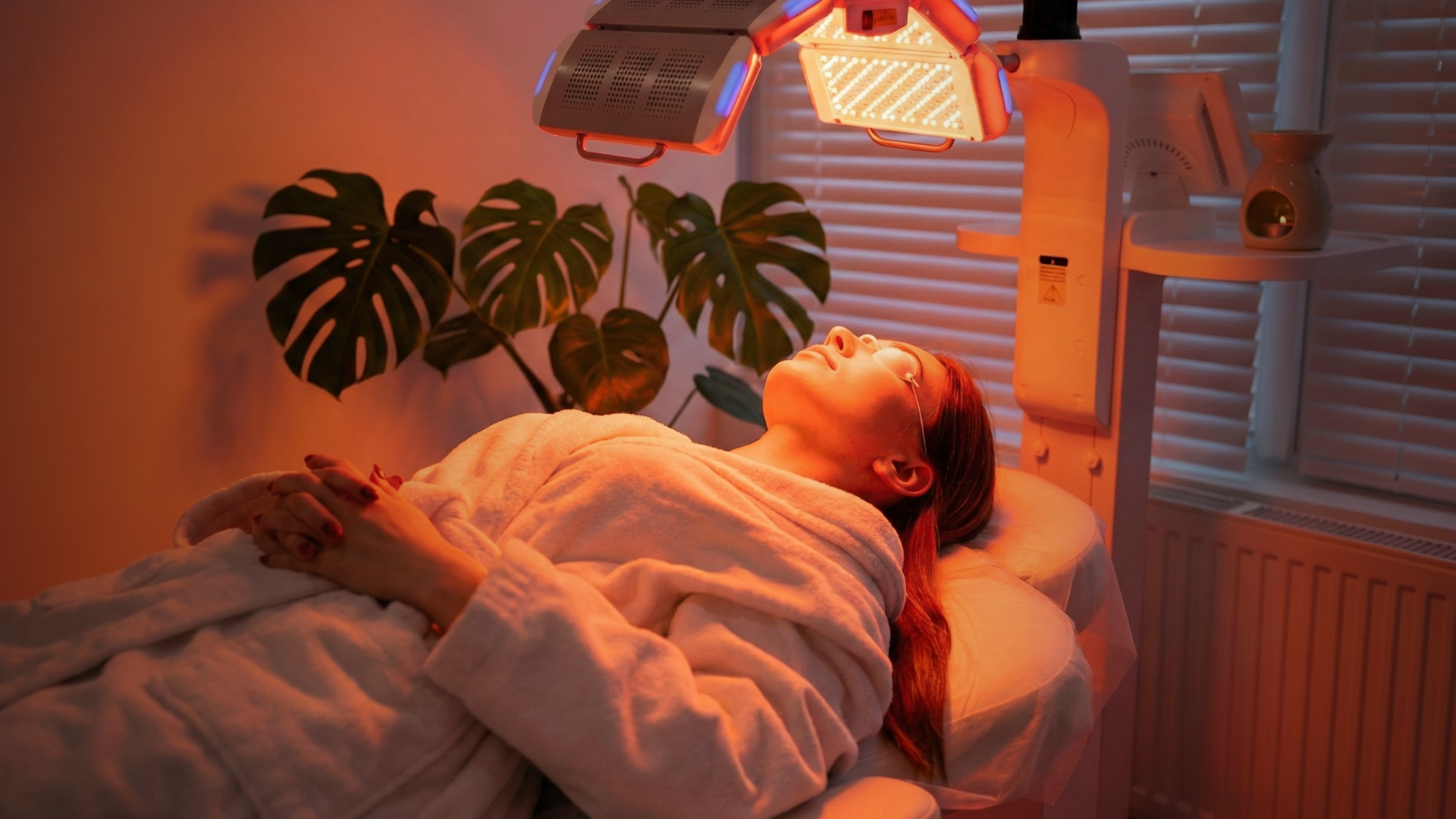
2. The Cellular Charger: Red Light Therapy (RLT)
While a SAD lamp is about signaling the brain, Red Light Therapy (photobiomodulation) is about powering the cell.
- The Science: Red and near-infrared wavelengths penetrate the skin and stimulate mitochondria to produce more ATP (cellular energy). In winter, our skin rarely sees the sun, leading to a systemic drop in cellular efficiency.
- The Protocol: 10 minutes daily, ideally on bare skin (chest/back). This doesn’t wake you up like a SAD lamp; it just makes your engine run cleaner.
Your “Blue Monday” Pre-Emptive Protocol
Don’t wait until Monday morning to feel the slump. Start hacking your circadian rhythm this weekend so you hit next week running.
Here is your 3-step protocol for Saturday and Sunday:
1. The 10-Minute Morning Anchor Within 30 minutes of waking up, get outside. Even a cloudy winter sky is roughly 10x brighter than your indoor lighting. You need at least 10 minutes of photons hitting your naked eyes (no sunglasses). This anchors your circadian rhythm for the day.
2. Deploy the Artificial Sun If it’s pouring rain or pitch black at 6 AM, use a 10,000-lux SAD lamp for 20 minutes. Treat this like a prescription medication. Do not skip a dose.
3. The Vitamin D Guardrail Light is only half the battle. In winter, your skin cannot make Vitamin D from the sun in the northern hemisphere, no matter how bright it is. Low Vitamin D mimics depression and fatigue.
- Protocol: Supplement with 5,000 IU of Vitamin D3 + K2 daily through March. (As always, check with your physician).
Want to Go Deeper? The “Sun Fear” Trap
We are talking about adding light back into your life, but for decades, we’ve been told to block it out.
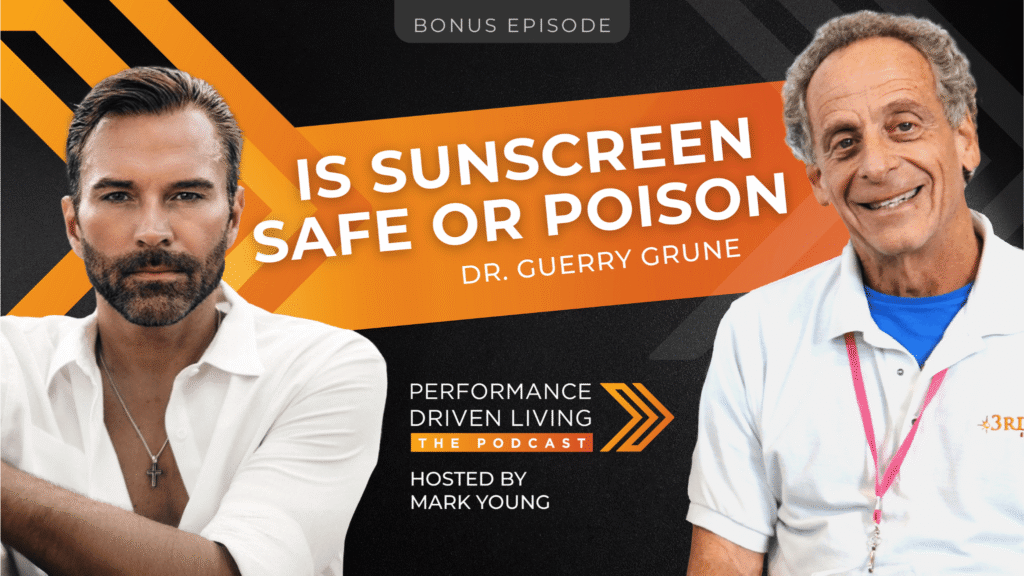
We have demonized the sun to the point where we are chronically light-deficient, even in the summer. If you want to understand why the “Sun Scare” might be one of the biggest health mistakes of the last 50 years—and why your sunscreen might be doing more harm than good—watch this bonus episode with Dr. Guerry Grune.
[Watch: Could Your Sunscreen Be More Dangerous Than the Sun?] – https://www.youtube.com/watch?v=DklwlXP-DsQ&list=PLslA3UL1LJibY5AUQvHB44Y-MS4tr6T8v&index=2
The Bottom Line
High energy in winter isn’t luck. It’s engineering.
Stop accepting the “winter blues” as inevitable. Give your brain and your cells the optical signal they are craving, and watch your focus return.