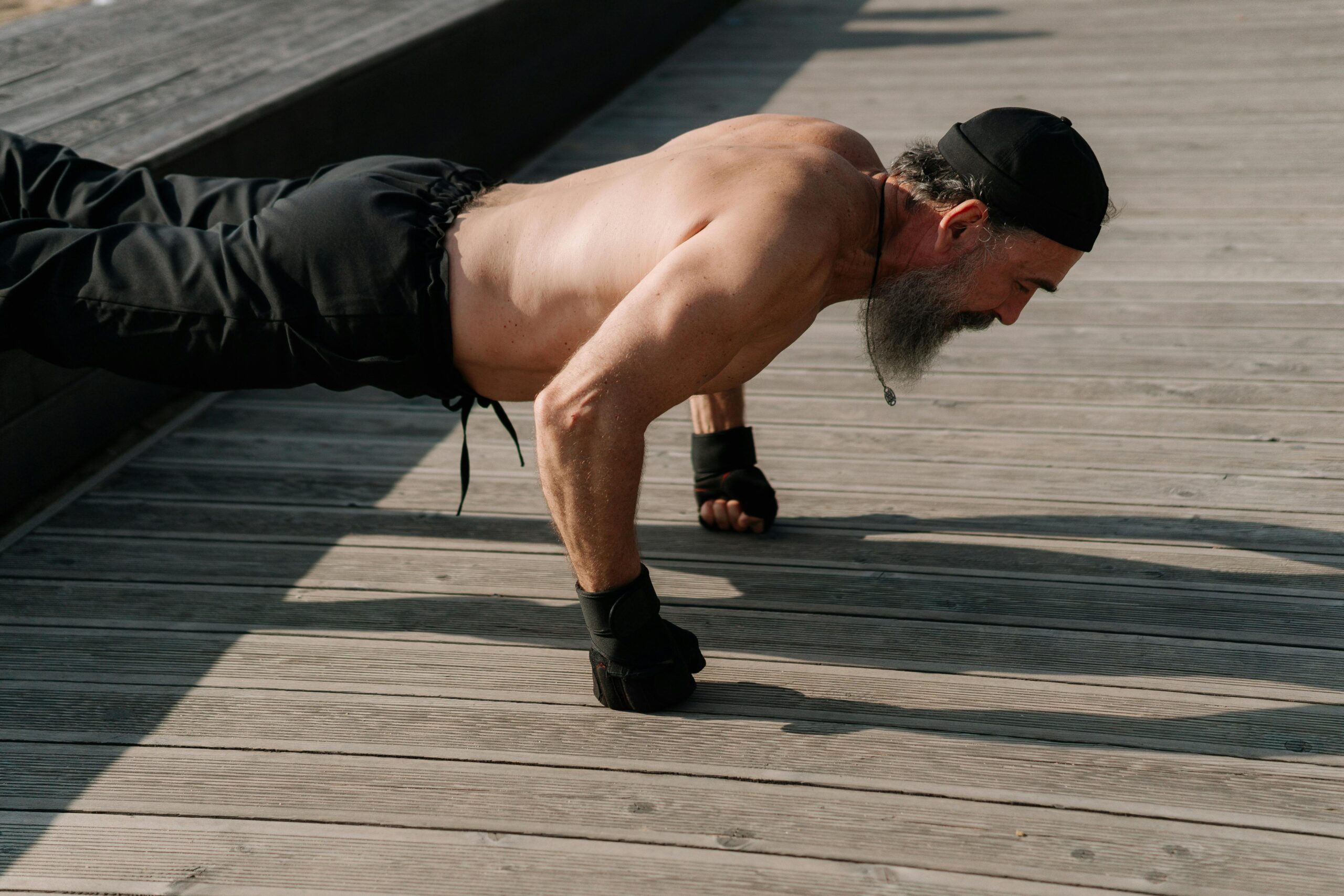


You did the workout. You hit your protein target. You’re doing everything the fitness articles told you to do — and yet the muscle isn’t coming back the way it used to in your 30s.
Check one more variable before you blame your program: your sleep.
Muscle isn’t built in the gym. It’s built in bed. The workout is just the stimulus — a controlled amount of damage to muscle fibers that signals your body to adapt. The actual adaptation, the repair and growth, happens during recovery, and the single highest-leverage recovery window you have is deep sleep. After 50, that window shrinks right when you need it most, and almost nobody explains why or what to do about it.
What Actually Happens to Muscle While You Sleep
Sleep isn’t one uniform state — it cycles through stages, and each one does different work. The stage that matters most for muscle is slow-wave sleep (SWS), the deepest non-REM stage, usually concentrated in the first half of the night.
During SWS, two things happen that directly determine whether your workout “counts”:
- Growth hormone (GH) release peaks. Roughly 70% of your daily GH secretion happens during deep sleep, in pulses tied to slow-wave activity. GH drives tissue repair and supports the muscle protein synthesis process that turns your workout’s micro-damage into actual growth.
- Your body flips from catabolic to anabolic. During the day, especially under stress or while fasted, your body leans toward breaking tissue down for fuel. During deep sleep, with cortisol low and GH high, the balance tips toward building — this is your net muscle protein synthesis window.
Cut deep sleep short, and you don’t just feel tired the next day — you blunt the actual biological process your training was supposed to trigger.
Why This Gets Harder After 50, Specifically
This isn’t “everyone needs more sleep” advice. There are two age-specific mechanisms working against you:
1. Slow-wave sleep declines with age — sharply. Multiple sleep-lab studies tracking sleep architecture across the lifespan show SWS dropping substantially from your 20s through your 60s, with the steepest declines showing up in midlife. By your 60s, many people are getting a fraction of the deep sleep they had at 25 — even if their total hours in bed haven’t changed. You can sleep the same 7 hours and get dramatically less of the stage that actually matters for repair.
2. Cortisol rhythm gets less disciplined. In a well-regulated system, cortisol is low at night and spikes in the morning to wake you up — a clean, sharp curve. Poor or fragmented sleep flattens that curve, so cortisol runs higher overnight than it should. Chronically elevated nighttime cortisol is a problem for muscle specifically because cortisol promotes protein breakdown (catabolism) and works in direct opposition to the anabolic, repair-focused state your body should be in overnight.
Put these together: less time in the repair stage, plus more of the hormone actively working against repair, at the exact same time in life you’re trying hardest to preserve muscle against natural age-related decline (sarcopenia typically accelerates after 50). That’s the sleep-muscle connection — and it’s why two people can lift identically and recover completely differently based on what happens after they put the weights down.
The Fix: Five Changes, No Supplements Required
You don’t need a $400 mattress or a sleep-tracking ring (though they don’t hurt). You need consistency on the things that actually govern sleep architecture.
1. Fix your wake time before you fix your bedtime.
Your circadian rhythm anchors primarily off wake time, not when you fall asleep. Pick a wake time and hold it within 30 minutes, seven days a week. This is the single highest-leverage lever — more reliable than any bedtime ritual.
2. Cut caffeine by 1-2 p.m., not just “no coffee after dinner.”
Caffeine’s half-life is around 5-6 hours in a healthy adult, but metabolism slows with age, extending that window further for many people. A 2 p.m. coffee can still have meaningful caffeine in your system at 8 p.m. — right when you’re trying to wind down. If you’re a slow caffeine metabolizer, push your cutoff to noon.
3. Drop the room temperature 2-3 degrees below what feels “comfortable.”
Core body temperature needs to fall to initiate and sustain deep sleep — it’s part of the biological trigger for SWS. Aim for roughly 65-68°F (18-20°C). A too-warm bedroom is one of the most common, most fixable causes of shallow sleep.
4. Treat alcohol as a deep-sleep tax, not a sleep aid.
Alcohol sedates you into sleep faster but suppresses REM and disrupts sleep architecture in the second half of the night — including the deep-sleep-adjacent recovery your muscles need. If you train hard, a nightcap is quietly working against the exact adaptation you trained for.
5. Get 10-15 minutes of morning sunlight.
Morning light exposure anchors your circadian clock and improves melatonin timing that night, which in turn supports getting into deep sleep faster once you’re in bed. This is free, takes minutes, and compounds over weeks.
The Bottom Line
If your recovery has stalled and you’ve already checked protein, program, and consistency, sleep architecture is the next place to look — not “more hours,” but more of the right stage. Deep sleep is where the muscle protein synthesis triggered by your workout actually gets to finish the job, and it’s also where cortisol finally backs off enough to stop working against you.
You can’t supplement your way around a bad sleep routine. But you can absolutely build one — and unlike your training program, it doesn’t require any equipment.
Want more on the hormone side of training after 50 — testosterone, cortisol, insulin sensitivity, and how they all interact with your workouts? That’s a running theme on the newsletter. Subscribe if you haven’t.