

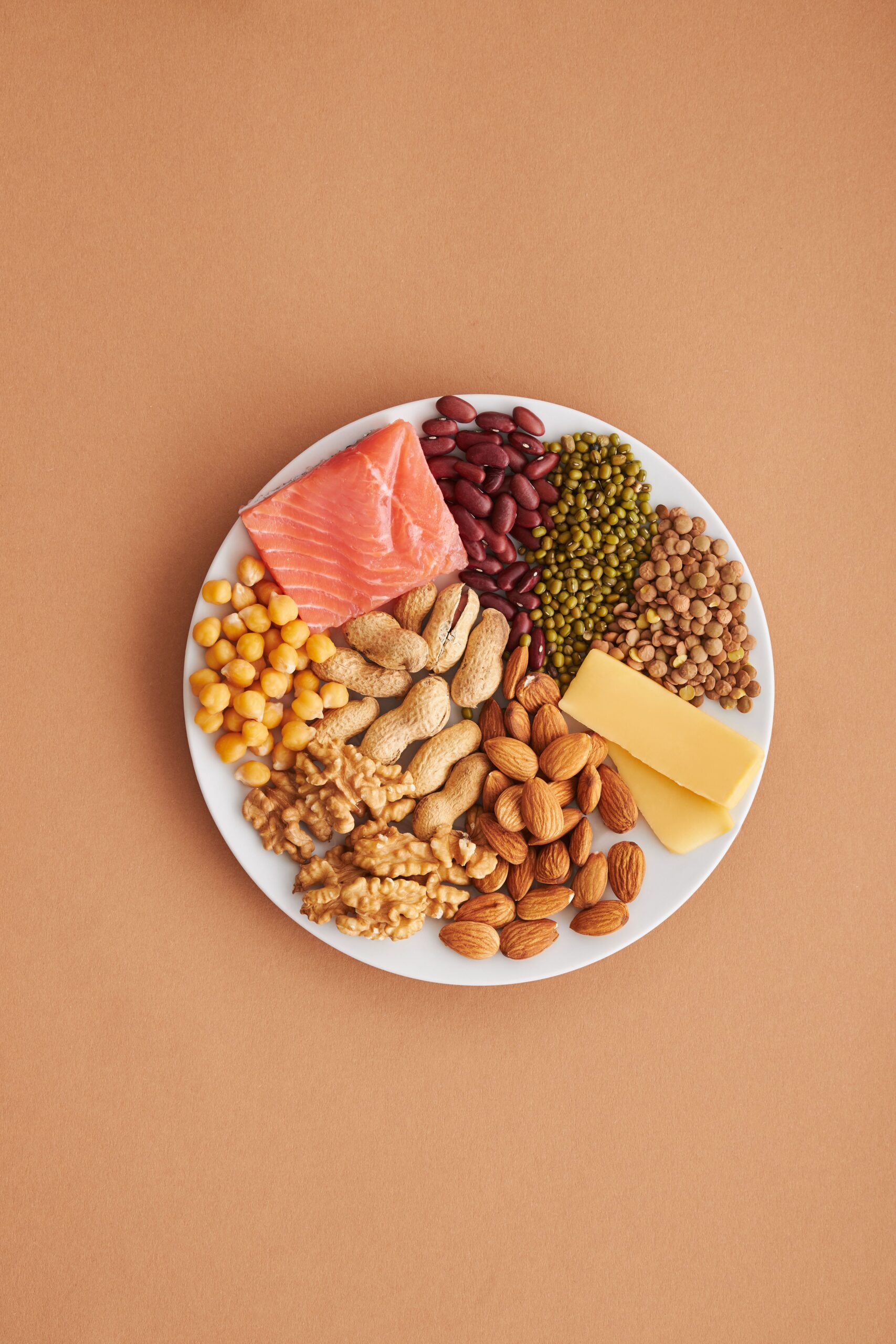
If you’ve ever been told to “cut back on protein” as you age — to spare your kidneys, to eat lighter, to leave the heavy meals behind — you were given advice that’s not just outdated, it’s the opposite of what the research actually supports.
Protein needs don’t decline after 50. They increase. Here’s the mechanism behind why, and the actual numbers to aim for.
The Real Reason You Need More, Not Less
The core issue is a phenomenon called anabolic resistance. In simple terms: as you age, your muscle tissue becomes less sensitive to the signal that protein sends to build and repair muscle. In your 20s and 30s, a moderate serving of protein — say 15-20 grams — was enough to meaningfully spike muscle protein synthesis (MPS), the process that repairs and builds muscle tissue.
After roughly 50, that same serving produces a noticeably smaller MPS response. Your muscles are, in effect, less “responsive” to the same dose. Research on this consistently finds that older adults need a larger single dose of protein — commonly cited around 30-40 grams per meal — to trigger a comparable MPS response to what a younger adult gets from 15-20 grams.
This is compounded by sarcopenia — the progressive, age-related loss of muscle mass and strength. Left unaddressed, adults can lose an estimated 3-8% of muscle mass per decade after 30, with the rate accelerating notably after 50 and again after 60. Sarcopenia isn’t cosmetic — it’s tightly linked to fall risk, metabolic health, independence, and even longevity. Adequate protein, especially paired with resistance training, is one of the few interventions proven to slow it.
Put simply: your body’s protein-repair machinery gets less efficient right as the reasons to protect muscle mass become more urgent. Cutting protein intake at this stage is fighting your own biology in the wrong direction.
So What’s the Actual Number?
The default number most people know — the RDA of 0.8 grams per kilogram of bodyweight (about 0.36 g/lb) — was established to prevent outright deficiency in the general, largely sedentary population. It was never designed as an optimal target for muscle preservation, and it was especially not designed with anabolic resistance in mind.
Geriatric nutrition research (including position papers from bodies like the PROT-AGE study group) has pushed a much higher figure for healthy older adults, particularly those who are physically active:
Target: 0.55 to 0.7 grams of protein per pound of bodyweight per day (roughly 1.2 to 1.6 g/kg).
In practical terms:
| Bodyweight | Daily protein target |
|---|---|
| 140 lbs | 77 – 98 g |
| 160 lbs | 88 – 112 g |
| 180 lbs | 99 – 126 g |
| 200 lbs | 110 – 140 g |
| 220 lbs | 121 – 154 g |
If you’re strength training regularly, lean toward the higher end of your range. If you’re recovering from illness, surgery, or a period of inactivity, the same higher end applies — your body needs more raw material to rebuild, not less.
Distribution Matters as Much as the Total
Because of anabolic resistance, how you spread protein across the day matters more after 50 than it did at 25. Getting 100 grams of protein in one dinner-heavy meal triggers a much smaller MPS response than the same 100 grams split across three or four meals of 25-35 grams each.
The practical target: aim for roughly 30-40 grams of protein per meal, 3-4 times a day. This is the single biggest adjustment most people need to make — not eating more protein overall, but stopping the pattern of a protein-light breakfast, a light lunch, and then trying to cram it all into dinner.
A Realistic Day That Hits the Target (Without Living on Chicken Breast)
Here’s what roughly 110 grams looks like spread across a normal day — no shakes required, though they’re a fine shortcut if you’re short on time:
- Breakfast: 3 whole eggs + 1/2 cup cottage cheese ≈ 32g
- Lunch: Grilled chicken breast (5-6 oz) on a salad ≈ 35g
- Snack: Greek yogurt (1 cup, plain) with berries ≈ 20g
- Dinner: Salmon fillet (5 oz) + a cup of lentils ≈ 45g
That’s roughly 130g across four eating occasions, none of which require a supplement aisle. If you do want an easy top-up, a whey or casein protein shake (20-25g) is a legitimate, well-studied way to close a gap — it’s not “cheating,” it’s just efficient.
Common Objections, Addressed
“Isn’t too much protein bad for your kidneys?”
For people with normal kidney function, there’s no solid evidence that protein intake in this range causes kidney damage. The kidney-damage concern applies specifically to people with pre-existing kidney disease, where protein intake genuinely should be managed by a doctor. If you don’t have a diagnosed kidney condition, this isn’t a reason to under-eat protein.
“Won’t extra protein just turn into fat?”
Excess calories from any source can be stored as fat, but protein is the most metabolically expensive macronutrient to process (it has the highest “thermic effect of food”) and is the most satiating — meaning it’s the macronutrient least likely to be your problem if weight management is a concern.
“I’m not trying to build muscle, just stay healthy — does this still apply?”
Yes. This range isn’t a bodybuilding target — it’s a muscle preservation target for general health, independence, and metabolic function as you age. You don’t need to be chasing size for this to matter.
The Bottom Line
The old advice to scale back protein with age has it backwards. Anabolic resistance means you need more protein to get the same muscle-building signal, and sarcopenia means the stakes for getting it right go up, not down. Aim for 0.55-0.7 g per pound of bodyweight, spread across 3-4 meals of roughly 30-40 grams each, and you’re working with your biology instead of against it.
For more myth-busting on nutrition and training after 50 — plus the science behind it in plain English — keep an eye on the newsletter.