

A practical comparison from someone who’s spent years around neuromodulation.
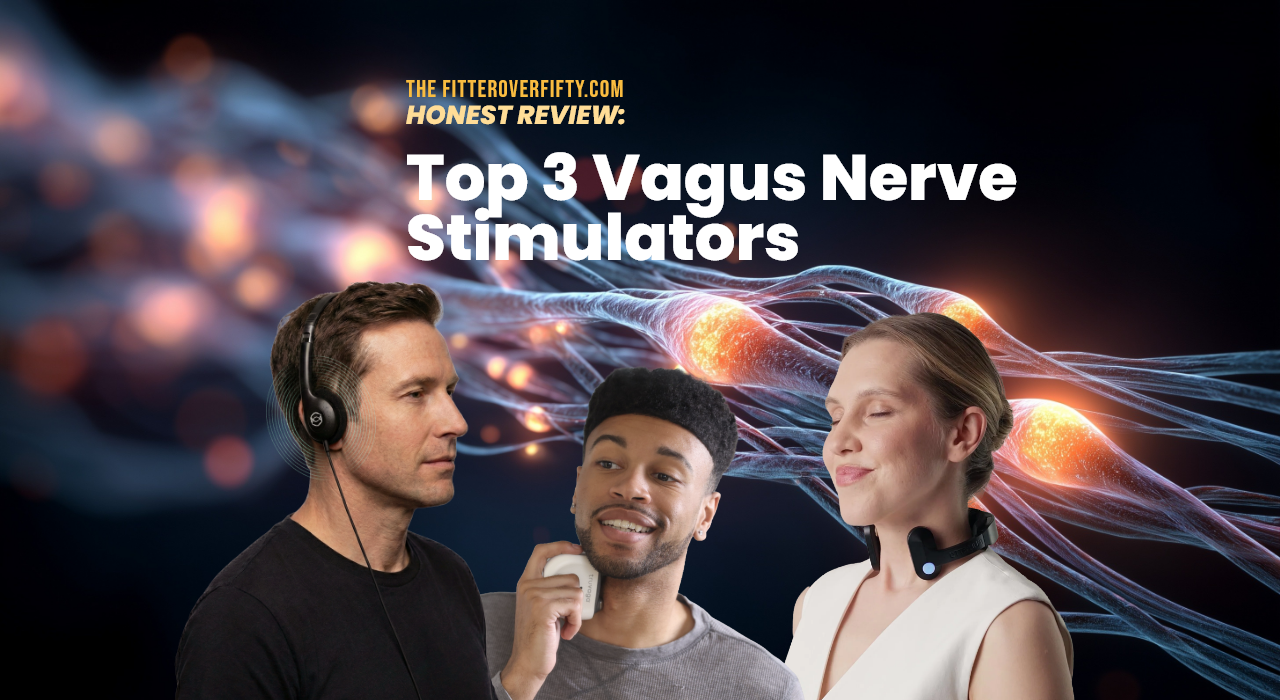
The vagus nerve has become a focal point in mental health, stress regulation, and performance optimization. But not all vagus nerve stimulators are built the same—and not all companies operate the same way either.
Below is a grounded look at three of the most talked-about devices:
- Pulsetto
- electroCore TruVaga
- ZenBud (ultrasound-based)
I’m not ranking them. I’ll outline what they are, where they fit, and what I’ve observed.
1. Pulsetto
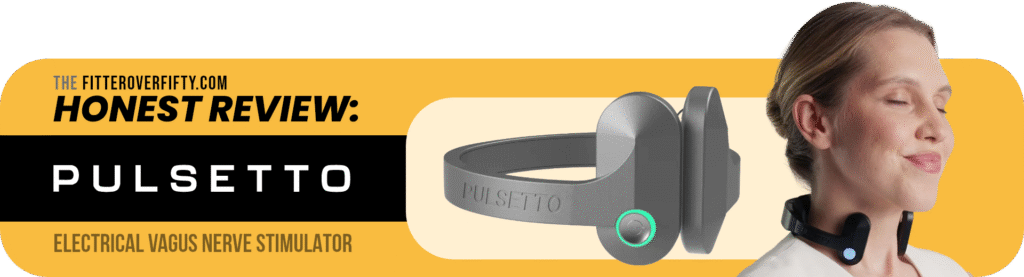
Website: pulsetto.tech
Pulsetto is a consumer electrical vagus nerve stimulator that wraps around the neck and delivers transcutaneous electrical stimulation (tVNS).
What people like:
- Lower cost compared to prescription options
- App-guided protocols
- Modern branding and influencer visibility
The controversies
Pulsetto has been involved in public criticism for:
- Allegations of plagiarism in marketing content (notably raised by reviewer Michael Kummer).
- A dispute involving references to Tim Ferriss, which generated public backlash when claims about endorsement were challenged.
I’m not here to litigate those issues—but transparency and credibility matter in health tech. When companies overreach in marketing, it creates distrust across the entire neuromodulation category.
On the tech itself
Pulsetto uses electrical stimulation applied to the cervical branch of the vagus nerve.
Electrical tVNS works by driving current through tissue. The downside is that:
- Current spreads diffusely.
- Sensory nerves activate before deeper autonomic fibers.
- Higher intensity is often needed for meaningful vagal engagement.
That means stronger tingling—or discomfort.
Some users tolerate it well. Others don’t.
2. electroCore TruVaga
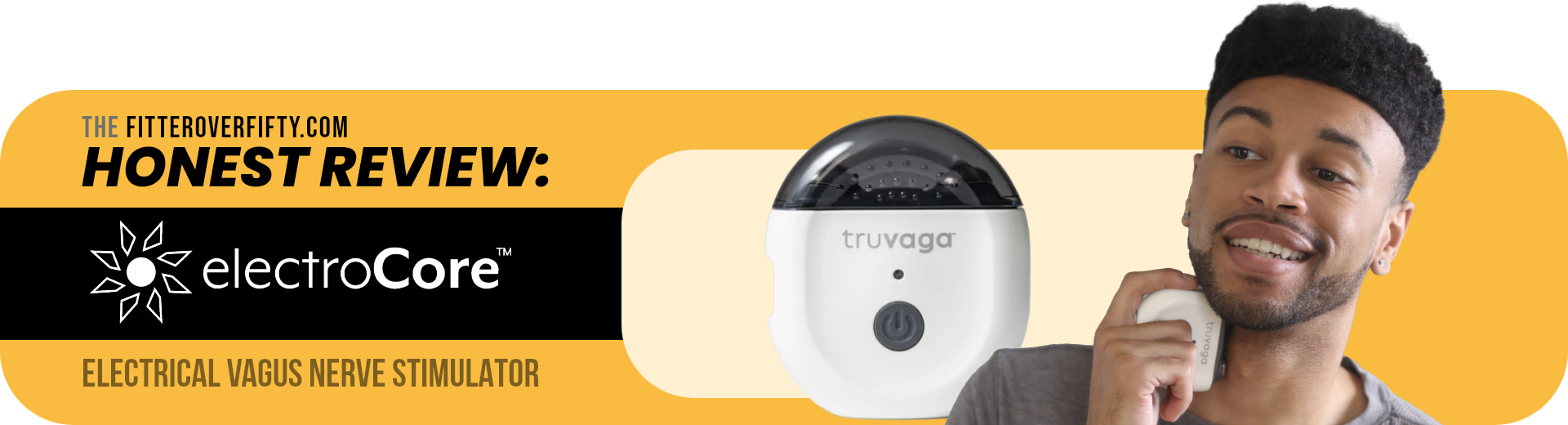
Website: truvaga.com
electroCore is the pioneer of non-invasive cervical vagus nerve stimulation. Their prescription device, gammaCore, paved the way for FDA-cleared non-invasive VNS in migraine and cluster headache.
TruVaga is their consumer version.
Strengths
- Founded by the original non-invasive VNS team.
- Strong clinical pedigree in headache disorders.
- Clear physiological target (cervical vagus).
They deserve real credit for opening this space.
The reality about intensity
To replicate clinical trial parameters, stimulation must be delivered at relatively high amplitude. In practice, that often means:
- Maximum setting
- Strong muscle contraction
- Sharp electrical sensation
For many users, that level of intensity feels uncomfortable. Some describe it as a “mini taser.” That’s not hyperbole—it’s simply the nature of electrical stimulation at therapeutic amplitudes.
Back in the early days of neuromodulation, I experimented with:
- TENS
- tDCS
- Various electrical neurostimulation platforms
I was never a fan.
Electrical approaches can work—but they are blunt instruments. They stimulate everything in the current path, not just what you want.
That’s a personal bias I acknowledge.
3. ZenBud (Ultrasound-Based VNS)

Website: zenbud.health
ZenBud takes a different approach: focused ultrasound stimulation of vagal innervation in the ear.
Why ultrasound is different
Ultrasound doesn’t rely on electrical current spreading through tissue.
Instead:
- It uses mechanical acoustic energy.
- It can be more spatially confined.
- It does not produce the same sharp electrical sensation.
Ultrasound neuromodulation is younger as a field. There is less historical data compared to electrical tVNS. That’s an honest limitation.
But that’s also why it’s interesting.
My experience
I had a genuinely good experience with ZenBud.
Subjectively:
- It felt calm, not jolting.
- No sharp electrical sensation.
- No muscle contraction.
- No “brace for impact” feeling before turning it on.
From a usability standpoint, that matters.
ZenBud is also a younger company. Less cumulative data exists compared to electroCore. Ultrasound VNS itself is newer in consumer form factors.
But innovation has to start somewhere.
Electrical vs. Ultrasound:
The Core Difference
| Feature | Electrical VNS (Pulsetto / TruVaga) | Ultrasound VNS (ZenBud) |
|---|---|---|
| Energy Type | Electrical Current | Mechanical acoustic waves |
| Sensation | Tingling to sharp contraction | Subtle mechanical sensation |
| Tissue Selectivity | Broad current spread | More focal potential |
| Historical Data | Decades (implantable + tVNS) | Emerging, growing |
| Pulsetto / TruVaga | ZenBud |
Neither approach is inherently “good” or “bad.”
They are different tools.
A Grounded Perspective
If you want:
- A lower-cost entry into electrical stimulation → Pulsetto may be accessible.
- A clinically-rooted, FDA-cleared lineage device → electroCore TruVaga carries credibility.
- A non-electrical, ultrasound-based approach → ZenBud offers something novel.
I’m not ranking them.
But I will say this:
After years of experimenting with electrical neuromodulation—TENS, tDCS, cervical tVNS—I was relieved to find an option that didn’t feel like I was bracing for a shock.
That’s why ZenBud caught my attention.
It’s newer. It’s less historically validated. Ultrasound VNS is still an evolving category.
But personally?
The experience felt different—in a good way.
Final Thought
Vagus nerve stimulation is not magic.
It’s physiology.
And how you deliver energy into the nervous system matters.
If you’re exploring this space, look at:
- Mechanism
- Intensity
- Evidence
- Comfort
- Company credibility
Then decide what aligns with your nervous system—and your standards.
Direct links
- Pulsetto – https://pulsetto.tech
- electroCore TruVaga – https://www.truvaga.com
- ZenBud – https://zenbud.health
If you’re going to stimulate your vagus nerve, at least understand how the energy gets there.
Hope this helps you find your calm.