

You Can’t Out-Train a Poor Foundation
We’ve all heard the saying, “You can’t out-train a bad diet.” But as we strive to age defiantly, we need to take that a step further. It’s not just about calories; it’s about the integrity of the information we are giving our bodies. When we talk about healthy aging nutrition, we aren’t talking about slowing down or settling for “average” health; we are talking about the strategic fuel required to keep your body performing like it’s still in its 30s.
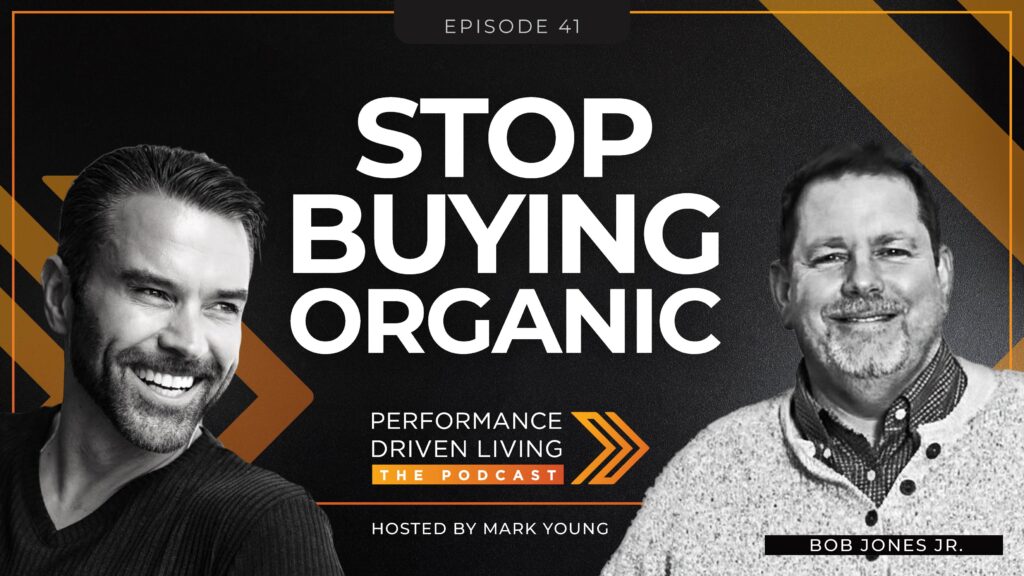
In a recent episode of the Performance Driven Living podcast, Bob Jones Jr., a leader in regenerative farming, dropped a truth bomb that every person over 50 needs to hear: “Not all carrots are created equal.” The same applies to your protein sources. If we want to maintain muscle mass and metabolic health, we have to look at the soil as much as the steak.
The Protein Gap: Why 50 is the Magic Number
Around age 50, our bodies become less efficient at processing protein—a phenomenon called “anabolic resistance.” To maintain the same muscle mass we had in our 30s, we actually need more high-quality protein, not less.
Why does this matter? Because muscle isn’t just for looks; it is your “metabolic armor.” It regulates blood sugar, supports bone density, and ensures you stay active and independent for decades to come.
Why Protein is a Personal Development Goal
Most people think muscle is about vanity. In reality, maintaining muscle mass after fifty is one of the greatest acts of self-mastery you can undertake. It requires a shift in mindset from “eating for hunger” to “eating for architecture.”
1. Overcoming Anabolic Resistance
As we maintain a body that feels like it’s in its 30s, we have to acknowledge that the “software” has changed. Our bodies naturally become more resistant to protein signals as we age. This is known as anabolic resistance. To stay ahead of the curve, we have to be more disciplined with our protein timing and quality. Aiming for 1.2g–1.5g of protein per kilogram of body weight isn’t just a suggestion; it’s a requirement for metabolic armor.
2. The Integrity of Information
Your food is essentially “information” for your cells. As our guest expert discussed, nutrient-depleted soil produces “empty” food. If you eat a steak or a plant protein that was raised on depleted land, you’re giving your body “bad data.” Choosing high-quality, regenerative sources is an investment in your personal infrastructure. You cannot build a high-performance life on low-fidelity fuel.
Quality Over Quantity: The Regenerative Edge
One of the most fascinating takeaways from Bob Jones Jr. is the link between soil health and human health. When food is grown in nutrient-depleted soil, we end up “starving with a full stomach.”
To age defiantly, our nutrition strategy should focus on:
- Bioavailability: Choosing protein sources that the body can actually use.
- Nutrient Density: Seeking out “Regenerative” or locally sourced foods. As Bob noted, fresh produce can lose 10% of its nutritive value every day post-harvest.
- The “Food is Medicine” Mindset: Understanding that what we eat eats. If your protein source was raised on depleted land, you aren’t getting the minerals and amino acids required to repair your tissues.
Your February “Muscle & Metabolism” Blueprint
To hit the recommended 1.2g–1.5g of protein per kilogram of body weight, we recommend a “Science-Forward” approach to your plate this month:
- Prioritize the “Big Three”: Lean grass-fed meats, wild-caught fish, and high-quality plant proteins (like lentils or chickpeas).
- The 30g Rule: Aim for at least 30 grams of protein at breakfast to “switch on” muscle protein synthesis for the day.
- Shop Local: Follow Bob’s advice—get to know your farmer. Supporting local regenerative agriculture isn’t just good for the planet; it ensures your “medicine” (your food) is as fresh and potent as possible.
The Bottom Line
Aging defiantly means refusing to accept the “slow fade” of muscle loss. By combining smart resistance training with high-integrity, nutrient-dense protein, you aren’t just eating—you’re refueling a high-performance machine.
Ready to see the science in action? If you want to hear the full breakdown on how soil health, regenerative farming, and nutrient density directly impact your longevity, check out our full deep-dive interview below.
[Watch: Organic vs. Regenerative Farming – Why Food is Medicine with Master Farmer Bob Jones Jr.]