


The vagus nerve has had a remarkable few years in the public conversation. What was once a topic confined to neurology conferences and hospital operating rooms has become something you can now address from your living room. For good reason: the vagus nerve is the primary highway of the parasympathetic nervous system — the biological infrastructure that governs how well you recover, sleep, regulate mood, and come down from a state of chronic stress.
Over the past two years, I’ve watched this category grow from two or three fringe devices into a genuinely crowded market, with products ranging from $50 gadgets to multi-hundred-dollar precision instruments. Most of them make similar-sounding claims. Very few earn those claims equally.
I’ve spent considerable time with the three devices that have attracted the most serious attention among clinicians, biohackers, and people looking for a drug-free way to manage an overloaded nervous system. This is not a sponsored post. It is a methodical look at what each device does, how well it does it, and — critically — which one I would recommend when someone asks me where to start.
I’ll give you my conclusion upfront: one device stands clearly above the others on the criteria that matter most. If you’re short on time, you’ll find the summary below. If you want to understand why, read on.
★ OUR TOP PICK: Best Vagus Nerve Stimulator 2026
ZenBud — Ultrasound VNS by NeurGear
The only non-invasive VNS device backed by peer-reviewed clinical data (JMIR Neuro, 2025), showing a 78.6% anxiety remission rate in participants. No electrical sensation. No discomfort. Five minutes. Our clear recommendation for anyone serious about nervous system recovery.
February Sale: $100 off — discount auto-applied at checkout.
HSA/FSA eligible. 90-day money-back guarantee. Free shipping.
→ zenbud.health
What I Used to Evaluate Each Device
Before getting into the devices themselves, here’s the framework I applied. Vagus nerve stimulation interacts with real physiology, and the standards I hold these products to reflect that.
- Technology & Mechanism: How does it actually work, and is the mechanism grounded in published science?
- Clinical Evidence: Does the company have peer-reviewed data supporting their specific device — or are they borrowing the literature of adjacent technologies?
- Comfort & Adherence: A device only works if you use it. Discomfort is the most common reason people stop.
- Company Credibility: Transparency, marketing integrity, and how the company conducts itself in a sensitive health category.
- Value & Risk Reversal: Is the price justified? Is there a meaningful guarantee that protects the buyer?
- Personal Experience: I used each device. Subjective experience isn’t the whole story, but it is part of it.
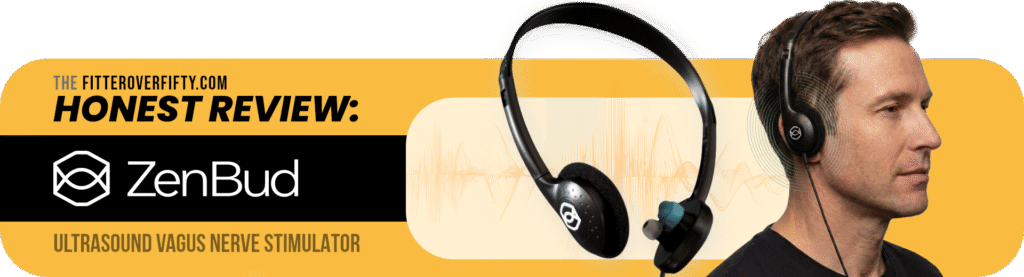
1. ZenBud — Ultrasound Vagus Nerve Stimulator
Website: zenbud.health
Technology: Low-Intensity Focused Ultrasound (LIFU)
Price: $399 (currently $299 with February sale) · Free Shipping · HSA/FSA Eligible
What It Is
ZenBud is the world’s first commercially available ultrasound-based vagus nerve stimulator. Developed by NeurGear Inc. in partnership with researchers at the University of Nottingham, it takes the form of a hands-free over-ear headset. Inside each earpiece is a miniaturized ultrasound transducer that emits focused acoustic waves targeting the auricular branch of the vagus nerve — the accessible nerve ending that runs through the outer ear canal.
Unlike every other consumer VNS device on the market, ZenBud does not use electricity. It uses sound — specifically, focused mechanical energy in the MHz range that penetrates skin and cartilage without electrical current passing through tissue. The result is direct stimulation of the autonomic fibers of the vagus nerve without the tingling, twitching, or discomfort that electrical approaches typically produce. No zaps. No prickling. Nothing to brace for.
The Science — and Why It Matters
The auricular branch of the vagus nerve connects directly to the nucleus tractus solitarius in the brainstem — the central hub of parasympathetic regulation. Stimulating this pathway reliably activates the body’s rest-and-digest response: reduced cortisol, improved heart rate variability (HRV), slower breathing rate, and a downshift in sympathetic nervous system activity.
What makes ZenBud’s approach distinct is the mechanism of activation. Ultrasound operates on mechanosensitive ion channels — it activates the nerve through acoustic pressure, rather than forcing electrical current through tissue. That distinction matters. Electricity follows the path of least resistance through the body, meaning it activates pain-sensing surface nerves before it reaches the deeper autonomic fibers you actually want to target. Ultrasound doesn’t have that problem. It can be spatially confined, precisely targeted, and delivered without producing sensation at the skin surface.
Think of electrical VNS as a wired telephone — it gets the signal through, but the infrastructure is blunt and everything in the wire path gets activated. Ultrasound is the Wi-Fi upgrade: the signal travels through the medium without needing a physical conductor, reaching deeper targets more cleanly.
78.6% anxiety remission rate in clinical trials
Research conducted in partnership with the University of Nottingham.
In a peer-reviewed study published in JMIR Neuro (2025), daily 5-minute ZenBud sessions produced 78.6% remission of clinical anxiety symptoms in participants with moderate-to-severe anxiety. The trial also showed statistically significant improvements in depression scores, PTSD symptom scales, and sleep quality — all measured using validated clinical instruments (Beck Anxiety Inventory, Beck Depression Inventory, PCL-5, Pittsburgh Sleep Quality Index).
That result deserves context. The comparison pool for consumer VNS devices typically shows effect sizes in the 10–15% improvement range, drawn mostly from informal pilot data. A 78.6% remission rate — measured with validated instruments in a peer-reviewed journal — is not a marketing figure. It reflects the difference between surface-level electrical stimulation and targeted acoustic neuromodulation reaching the deeper afferent fibers of the vagus nerve directly. Beta user data further supports this: 80% of beta users reported feeling calmer within 5 minutes of their first session.
ZenBud is CE Compliant, HSA/FSA eligible, and endorsed by Dave Asprey (widely recognized as the “Father of Biohacking”), Dr. Christine Smith, and nutritionist Nathalie Niddam — each of whom has engaged with the device based on its scientific credentials.
My Experience
I’ll be direct: I did not expect to be impressed. I’ve spent years around electrical neuromodulation tools — TENS, tDCS, cervical tVNS — and my experiences with them ranged from underwhelming to genuinely uncomfortable. I came to ZenBud with healthy skepticism.
What I found was different in a way that caught me off guard. The device is completely sensation-free during use. No tingling. No muscle contraction. No bracing for an electrical pulse. You place it on, press the button, and sit quietly for five minutes. The effect — a settling, a lowering of what I can only describe as background neural noise — was noticeable within the session. It didn’t feel like a gadget was doing something to me. It felt like my nervous system was being guided somewhere it already knew how to go.
Multiple colleagues and patients have since tried it. The word that comes up most consistently: grounded. One described it as being rocked to sleep. That’s not language I’d expect from a clinical device. It’s language I trust, precisely because it wasn’t coached.
What’s Included
The ZenBud package includes the headset, battery pack and charging cord, a one-month-plus supply of silicone pads and ultrasound gel, a quickstart guide, and a free travel case. One-year warranty. Free shipping. And critically: a 90-day money-back guarantee — a genuine commitment in a category where most brands offer 30 days or nothing.
STRENGTHS | LIMITATIONS |
Only consumer VNS backed by peer-reviewed clinical data (JMIR Neuro, 2025) | Higher price than basic electrical options ($299 on sale, $399 standard) |
78.6% anxiety remission rate in University of Nottingham clinical trial | Ultrasound VNS is a newer consumer category — long-term population data still building |
80% of beta users felt calmer within 5 minutes | Requires ultrasound gel for optimal coupling (included, but adds a prep step) |
Completely sensation-free — no zaps, no prickling, no discomfort | |
Hands-free headset — no holding required | |
Targets auricular branch — precise, brainstem-connected pathway | |
CE Compliant | HSA/FSA eligible | |
90-day money-back guarantee | Free shipping | Free travel case | |
Endorsed by Dave Asprey, Dr. Christine Smith, Nathalie Niddam |
February Sale: $100 Off ZenBud — Discount Auto-Applied at Checkout
Peer-reviewed. Sensation-free. 5 minutes. Find your calm.
→ Visit zenbud.health to order
90-Day Money-Back Guarantee · Free Shipping · HSA/FSA Eligible · 1-Year Warranty
RUNNER-UP
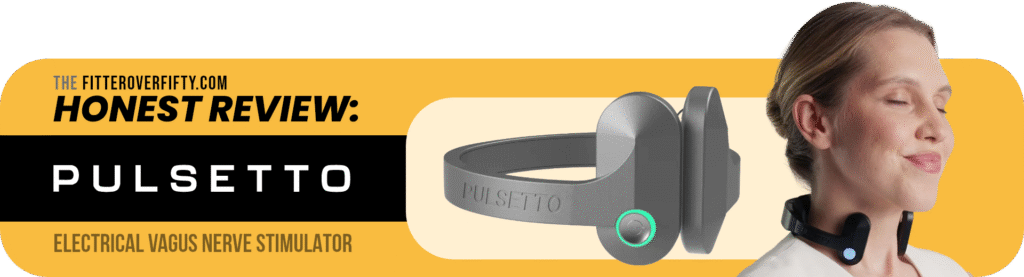
2. Pulsetto — Electrical tVNS Neck Device
Website: pulsetto.tech
Technology: Transcutaneous Electrical Nerve Stimulation (tVNS)
Price: Approx. $149–$199
What It Is
Pulsetto is a consumer electrical vagus nerve stimulator that wraps around the neck and delivers transcutaneous electrical stimulation to the cervical branch of the vagus nerve through two electrodes placed on either side of the throat. Launched from Europe in 2022, it pairs with an app offering programs for relaxation, sleep, focus, and recovery. Sessions run approximately 6–10 minutes.
To Pulsetto’s genuine credit: the company was early. They translated relatively obscure neuroscience into an approachable consumer product, brought VNS into mainstream wellness vocabulary, and built a significant user base quickly. Someone in this space had to go first, and Pulsetto went first. That matters.
How the Technology Works — and Where It Falls Short
Electrical tVNS works by driving current through the skin and underlying tissue toward the vagus nerve. The core limitation is physics: electrical current doesn’t travel in a straight line. It disperses through tissue, activating sensory nerve fibers near the skin surface — the ones that register tingling and discomfort — before reaching the deeper autonomic fibers that drive the parasympathetic response. The result is that you often need to increase intensity to achieve meaningful vagal engagement, and at higher intensities the sensation can range from uncomfortable to genuinely distracting.
Some users adapt and report real benefits. Others find the sensation consistently off-putting and eventually stop using the device. In a category where daily adherence determines outcomes, that drop-off is a meaningful clinical limitation — not just a user experience complaint.
Pulsetto’s internal pilot studies suggest improvements in HRV and perceived stress after two weeks of consistent use, in line with broader electrical-tVNS literature showing effect improvements in approximately the 10–15% range. These studies are not peer-reviewed, which limits how much independent weight they can carry in a rigorous evidence assessment.
A Note On Company Conduct
I raise this carefully, because it can read as a pile-on. But in a health technology category, how a company presents itself matters. There have been documented public issues with Pulsetto’s marketing practices that are worth noting for any thorough review. Reviewer Michael Kummer raised substantive, public allegations of content plagiarism in Pulsetto’s marketing materials — claims the company never credibly addressed. There was also a separate controversy involving implied references to Tim Ferriss that generated significant public backlash when the nature of those claims was questioned.
I’m not litigating those cases here. But when a company operates in a sensitive health category and relies heavily on authority figures and clinical credibility for conversion, the integrity of that credibility matters. Readers should apply their own due diligence.
STRENGTHS | LIMITATIONS |
Lower entry price point — accessible for first-time buyers | Electrical stimulation produces tingling, buzzing, or twitching for many users |
App-guided protocols for different use cases (relax, sleep, focus, recovery) | No peer-reviewed clinical data for the Pulsetto device specifically |
Broad consumer adoption — large user community | Current spreads diffusely — less precise than acoustic targeting |
Modern branding and approachable UX | Targets cervical branch (neck), which can vary by anatomy and electrode placement |
Helped popularize vagus nerve stimulation as a consumer wellness category | Documented public controversies around marketing integrity |
30-day return window only |
HONORABLE MENTION
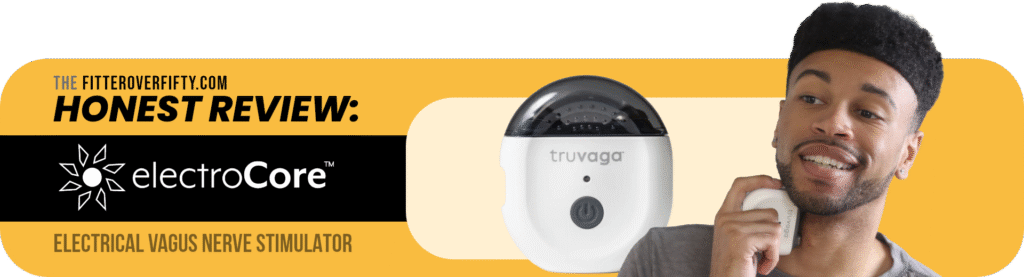
3. electroCore TruVaga — Electrical Cervical VNS
Website: truvaga.com
Technology: Electrical Transcutaneous Cervical VNS
Price: Approx. $299 (subscription-based model)
What It Is
electroCore is the company that, arguably, made this entire category legitimate. Their prescription device, gammaCore, was the first FDA-cleared non-invasive vagus nerve stimulator, approved for migraine and cluster headache. They have decades of clinical research, published data, and genuine institutional credibility behind them. TruVaga is their consumer-facing product, bringing that clinical pedigree into a non-prescription, direct-to-consumer format.
That lineage deserves respect. electroCore didn’t come to this space via wellness marketing — they came through clinical trials, FDA submissions, and peer-reviewed research. That’s a meaningful distinction from most of the VNS landscape.
The Reality About Electrical Intensity
Here is where I have to be honest, drawing on my own extended experience with electrical neuromodulation: to replicate the stimulation parameters used in clinical trials with electrical cervical VNS, you typically need to deliver stimulation at a relatively high amplitude. In practice, for many TruVaga users, that means: maximum or near-maximum intensity settings, noticeable muscle contraction in the neck, and a sharp electrical sensation that some users have described — not unfairly — as feeling like a “mini taser.”
That isn’t hyperbole and it isn’t a knock on the engineering. It is simply the inherent nature of electrical stimulation at therapeutic amplitudes. The surface sensory nerves activate before the deeper autonomic fibers, and the gap between what’s comfortable and what’s therapeutically effective is often narrow. For users with strong tolerances, this is manageable. For a large portion of the population, it’s a real barrier to consistent daily use.
I personally experimented with TENS, tDCS, and various electrical neurostimulation platforms in the earlier years of my work in this space. I was never a fan — not because the mechanism doesn’t work, but because the experience made adherence difficult. Electrical approaches can be effective blunt instruments. They stimulate everything in the current path, not just what you want. That remains a structural limitation of the modality, regardless of who builds the device.
Where TruVaga Earns Credit
The clinical pedigree is real. electroCore’s research base in migraine and cluster headache is among the most rigorous in the non-invasive neuromodulation space. For users specifically managing those conditions, TruVaga carries a credibility profile that no consumer wellness device can match.
For general stress, anxiety, and recovery use — which is the primary use case for most readers here — the evidence is more limited, and the comfort profile presents a meaningful adherence challenge. It’s not the right tool for the job when better-tolerated alternatives exist with stronger outcomes data.
STRENGTHS | LIMITATIONS |
Strongest clinical pedigree in the category — backed by decades of electroCore research | Strong electrical sensation — many users describe it as uncomfortable to sharp |
FDA-cleared lineage (gammaCore) in migraine and cluster headache | Handheld device — requires manual application, cannot be used hands-free |
Clear physiological target — cervical vagus nerve | Limited peer-reviewed data for consumer general wellness use specifically |
Company credibility and institutional history are excellent | Subscription pricing model adds ongoing cost |
HSA/FSA eligible through prescription pathway | Lower adherence reported among general wellness users due to sensation |
30-day return window |
Full 3-Way Comparison:
ZenBud vs. Pulsetto vs. electroCore TruVaga
Here’s how the three devices stack up across every major decision factor. The table represents my independent assessment of each device based on published data, personal use, and user-reported outcomes.
CATEGORY | ZENBUD | PULSETTO | TRUVAGA |
Technology | Ultrasound (LIFU) | Electrical tVNS | Electrical tVNS |
Stimulation Target | Auricular branch (ear) | Cervical branch (neck) | Cervical branch (neck) |
Sensation During Use | None — fully sensation-free | Tingling to buzzing | Tingling to strong contraction |
Peer-Reviewed Clinical Data | ✓ Yes — JMIR Neuro 2025 | ✗ Internal pilot data only | ✓ Yes — but for migraine/headache, not general wellness |
Published Anxiety Outcomes | 78.6% remission rate | Not published / not peer-reviewed | Not applicable to consumer use |
HRV Improvement | ✓ Significant (JMIR 2025) | ✓ Modest (~10–15%, internal) | Limited consumer data |
Form Factor | Hands-free headset | Neck band (held on) | Handheld device |
Session Length | 5 minutes | 6–10 minutes | 2 minutes (handheld) |
Comfort Level | High — no sensation | Moderate — some find it distracting | Low–Moderate — strong electrical feel |
Daily Adherence (User Reports) | High | Moderate | Low–Moderate |
HSA/FSA Eligible | ✓ Yes | ✗ Not confirmed | ✓ Yes (prescription path) |
Money-Back Guarantee | 90 days | 30 days | 30 days |
Price (approx.) | $399 | $249–$299 | $299, $499 (subscription model) |
Company Credibility Notes | University of Nottingham partnership; peer-reviewed research | Public controversies: plagiarism allegations, endorsement disputes | Strong clinical pedigree in headache; consumer product is newer territory |
Our Verdict | ★ TOP PICK | RUNNER-UP | HONORABLE MENTION |
Electrical vs. Ultrasound: The Core Technical Difference
Both Pulsetto and electroCore TruVaga use the same fundamental approach: electrical current applied to the vagus nerve through the skin. This is the paradigm that has dominated non-invasive VNS since the earliest transcutaneous devices. It works. The literature supports it. The limitation is not the destination — it’s the delivery.
Electrical current, when applied to the body, doesn’t travel directly to the nerve you’re targeting. It disperses outward from the electrode, activating everything in its path in order of electrical resistance. Surface sensory nerve fibers — the ones that fire when you touch a hot surface or stub your toe — have lower resistance than the deep autonomic fibers of the vagus nerve. So they activate first, producing the tingling, buzzing, or twitching sensation that is characteristic of all electrical tVNS devices. To get meaningful vagal activation, you have to push through that sensory layer, which means higher intensity, which means more discomfort.
Ultrasound works differently at the physics level. Acoustic mechanical waves travel through tissue predictably, following anatomical structures rather than electrical gradients. They can be focused — like a lens — to a specific target area at a specific depth, without activating the intervening tissue. The mechanosensitive ion channels on the auricular branch of the vagus nerve respond to this mechanical pressure directly, producing nerve activation without any surface sensation.
The analogy that serves me best: electrical VNS is a wired telephone. The signal gets through, but the infrastructure is blunt — the current travels the whole wire and affects everything along it. Ultrasound VNS is the Wi-Fi upgrade. The signal reaches its target through the medium without needing to run current through the conducting tissue in between.
The clinical implications are significant. When you remove the sensory discomfort from the equation, adherence improves. When adherence improves, outcomes improve. That is not a secondary concern — it is the primary reason the clinical data for ZenBud looks so different from the data for electrical alternatives.
Which Device Is Right for You?
Buy ZenBud if:
- You want the strongest available clinical evidence behind your choice — and the 78.6% anxiety remission result in a peer-reviewed journal matters to you.
- Comfort and sensation-free use are important — you have low tolerance for electrical sensation, or you’ve tried electrical VNS and found it distracting or unpleasant.
- You’re a biohacker or HRV-tracker who wants an active intervention that demonstrably moves the needle on measurable metrics.
- You want hands-free use — you need to be able to use it while working, reading, or resting, without holding anything in place.
- You’re looking for a tool with serious science behind it, not just wellness marketing borrowing clinical-sounding language.
Consider Pulsetto if:
- You’re on a tighter budget and want a first introduction to vagus nerve stimulation at a lower price point.
- You tolerate mild electrical sensation well and prefer an app-guided protocol approach.
- You’re not yet ready to commit to a premium device and want to explore the category before investing further.
Consider TruVaga if:
- You have a specific clinical need in the migraine or cluster headache space, where electroCore’s research pedigree is directly relevant.
- You have high tolerance for electrical sensation and want the deepest institutional credibility in electrical cervical VNS.
What ZenBud Users Are Saying
The clinical data tells one part of the story. User experience tells another. These are representative of the feedback I’ve seen and heard directly.
“As a chiropractor, I’m always looking for effective solutions to help my patients achieve relief. ZenBud has been a game-changer for those dealing with chronic stress and tension. The results have been consistently impressive.” — Dr. Larry Peshkin, IronChiro
“Consistency is key to maintaining good mental health. ZenBud makes it simple to stay on track, and it only takes five minutes to feel the effects.” — Steve Nicosia
“I’ve tried the electrical VNS devices. The prickling sensation made me dread using it, so I stopped. With ZenBud I forget I’m even wearing it — and somehow that’s when it works best.” — ZenBud beta user
“As the Father of Biohacking, I’ve seen every tool in the space. ZenBud’s ultrasound approach is a genuine technical leap. The body responds to it differently.” — Dave Asprey
Try ZenBud Risk-Free for 90 Days
If you don’t feel the difference, send it back. No questions. That’s how confident we are.
→ Order at zenbud.health — February Sale: $100 off, auto-applied
90-Day Money-Back Guarantee · Free Shipping · HSA/FSA Eligible · 1-Year Warranty
Frequently Asked Questions
Is ZenBud better than Pulsetto?
On the dimensions that matter most — clinical evidence, comfort, and daily adherence — yes. ZenBud is the only consumer VNS device with peer-reviewed clinical trial data supporting its specific device, and that data shows a 78.6% anxiety remission rate (JMIR Neuro, 2025). Pulsetto’s evidence base consists of internal pilot data that has not been peer-reviewed. ZenBud also delivers a completely sensation-free experience, which dramatically improves the likelihood that someone will actually use it consistently — and consistency is what drives long-term outcomes. Pulsetto remains a reasonable lower-cost entry point into the category, but if results matter to you, ZenBud has the stronger case.
Does ZenBud actually work?
The clinical evidence says yes. In a peer-reviewed study published in JMIR Neuro (2025), conducted with University of Nottingham researchers, participants using ZenBud for daily 5-minute sessions showed a 78.6% remission rate for clinical anxiety, as well as significant improvements in depression scores, PTSD symptom scales, and sleep quality. Additionally, 80% of beta users reported feeling calmer within 5 minutes of their first session. ZenBud is not a wellness gadget with borrowed science — it is a device with its own published outcomes data.
What is the difference between ultrasound VNS and electrical VNS?
Electrical VNS (used by Pulsetto and TruVaga) drives current through skin and tissue toward the vagus nerve. Because electrical current disperses through tissue and activates surface sensory nerves first, it typically produces a tingling, buzzing, or twitching sensation, and users often need higher intensity settings to achieve meaningful vagal engagement. Ultrasound VNS (ZenBud) uses focused acoustic waves that penetrate tissue mechanically, activating the vagus nerve’s mechanosensitive ion channels directly without surface sensation. It can be spatially targeted with greater precision, reaches deeper autonomic fibers more cleanly, and produces no skin-level sensation at all.
Is ZenBud safe?
Yes. ZenBud uses Low-Intensity Focused Ultrasound (LIFU) — the same type of ultrasound energy that has been used safely in medical imaging for decades. The device is CE Compliant, meeting EU standards for electronic safety, ultrasound safety, and electromagnetic compatibility. It is non-invasive, drug-free, and operates within intensity ranges well-established as safe for consumer use. ZenBud is a general wellness device, not a medical device, and is not intended to diagnose or treat any medical condition.
Is ZenBud HSA/FSA eligible?
Yes. ZenBud is HSA/FSA eligible, which means you can purchase it with pre-tax health savings account funds and effectively save 20–30% depending on your tax bracket. This makes the net cost significantly more accessible than the sticker price suggests.
What if it doesn’t work for me?
ZenBud offers a 90-day money-back guarantee — one of the most generous in the category. If you use it consistently for 90 days and don’t experience the difference, you can return it for a full refund. That guarantee is a meaningful signal from the company: they believe in what the device does, and they’re willing to stand behind it with real financial risk.
How does ZenBud compare to meditation or breathwork?
It’s not a replacement — it’s a tool that works well alongside both. Breathwork and meditation are effective for building autonomic resilience over time, but they require mental effort, practice, and the ability to focus that is itself difficult when the nervous system is in overdrive. ZenBud delivers the same physiological outcome — vagal activation, parasympathetic upregulation — through a direct physical mechanism that doesn’t require mental effort or technique. Many users find that a 5-minute ZenBud session lowers the baseline enough that subsequent breathwork or meditation becomes noticeably more effective.
Final Verdict
Vagus nerve stimulation is not a trend. It is applied neuroscience, and the evidence base for activating the parasympathetic nervous system through vagal pathways is solid, peer-reviewed, and growing. The question isn’t whether the concept works. The question is which device delivers it most effectively, most comfortably, and with the most integrity.
After spending meaningful time with all three devices reviewed here, and assessing the evidence dispassionately, the answer is ZenBud. It is the only consumer VNS device with its own peer-reviewed clinical outcomes. It is the only one that delivers stimulation without electrical sensation. It is the only one that targets the auricular branch with focused acoustic precision rather than diffuse cervical electrical current. And it is the only one whose manufacturer backs the device with a 90-day money-back guarantee that genuinely removes the buyer’s risk.
Pulsetto deserves credit for opening this space to mainstream consumers. electroCore deserves credit for the clinical foundation they built in electrical VNS. Both have a place in the story of how this category developed.
But if you’re asking me which device to buy today — and to use consistently, for long enough to actually build the vagal tone that changes your baseline — that answer is ZenBud. The science says so. My experience says so. And the 90-day guarantee means the only thing you have to lose is the chronic stress you were carrying before you tried it.
“If you’re going to invest in your nervous system, invest in the one that has the science to back it up.”
★ OUR PICK: ZenBud
— Find Your Calm in 5 Minutes
February Sale: $100 off — Discount auto-applied at checkout |
90-Day Money-Back Guarantee
→ zenbud.health
90-Day Money-Back Guarantee · Free Shipping · HSA/FSA Eligible · 1-Year Warranty
About the Author
Dr. Mark Young is a functional medicine PhD and the author of Fitter Over Fifty. He has spent two decades in integrative medicine and neuromodulation research. His reviews are independent and reflect his professional assessment.
Disclaimer: ZenBud is a general wellness device. It is not a medical device and is not intended to diagnose, treat, cure, or prevent any medical condition. Individual results may vary. The peer-reviewed data cited refers to the JMIR Neuro (2025) study conducted with University of Nottingham researchers. Always consult a qualified healthcare professional before beginning any new wellness regimen.